
For many small business owners, signing a commercial lease is one of the biggest financial commitments they will make. A lease for a shop, office, warehouse or café can run for several years, and the obligations it creates often go well beyond paying rent each month. Understanding the main terms before signing can help business owners avoid unpleasant surprises down the track.
This article explains in general terms what a commercial lease usually covers, the clauses that commonly cause disputes, and when people typically choose to have a solicitor or lawyer review the document.
Commercial vs retail leases
Not every business lease is treated the same way. Every Australian state and territory has its own legislation that applies to retail leases, which generally cover premises used to sell goods or services to the public, such as shops in a shopping centre or a strip of shopfronts. These laws often give tenants extra protections, such as requirements for the landlord to provide certain disclosure documents before the lease is signed and limits on which costs can be passed on to the tenant.
Leases that don’t qualify as retail, such as many office, industrial and warehouse leases, are often governed mainly by the lease document itself and general contract and property law. Whether a particular lease counts as “retail” depends on the definitions in the relevant state or territory’s legislation and can turn on details like the use of the premises, its size or the type of tenant. This is one of the first things a solicitor will usually check, because it can change the rights and obligations on both sides.
Key terms worth understanding
Commercial leases vary widely, but in many cases the following clauses are the ones that matter most:
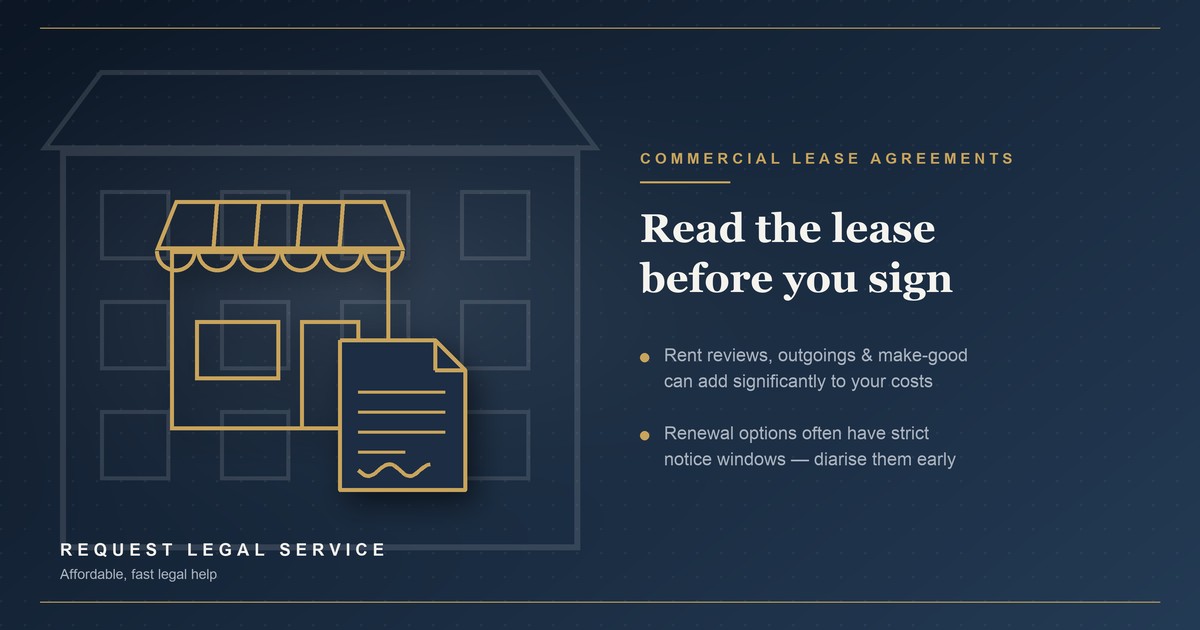
- Term and options to renew: A lease might run for an initial term with one or more options to extend. Options usually have to be exercised in writing within a specific window before the lease expires. If the window is missed, the right to renew may be lost, which can put a well-established business location at risk.
- Rent and rent reviews: Leases commonly allow the rent to increase during the term, whether by a fixed percentage, in line with the Consumer Price Index (CPI), or through a market review. The review method and how often it applies can have a big effect on the total cost of the lease.
- Outgoings: Many leases require the tenant to contribute to costs such as council rates, water rates, insurance, cleaning of common areas and building maintenance. These amounts can add significantly to the cost of occupying the premises, so it’s worth understanding what is included and how it is calculated.
- Security: Landlords often ask for a bank guarantee or a security deposit, and sometimes a personal guarantee from the business’s directors. A personal guarantee can mean the individual is personally responsible if the business can’t meet its obligations.
- Make good obligations: At the end of the lease, tenants are frequently required to return the premises to its original condition. That can mean removing fit-outs, signage and fixtures, which may be expensive if it isn’t planned for.
- Assignment and subletting: If the business is sold or needs to move, the ability to transfer the lease to someone else, and on what conditions, becomes very important.
When do people typically get legal help?
Many business owners have a solicitor or lawyer review a commercial lease before signing, when there’s still room to negotiate terms such as rent reviews, the length of the term, incentives or make good requirements. Once a lease is signed, changing its terms usually requires the landlord’s agreement.
People also commonly seek help when a dispute comes up during the lease, for example over outgoings, repairs, a rent review the tenant disagrees with, or a landlord’s notice of breach. Other common points are when a business owner wants to exercise or negotiate an option, sell the business and assign the lease, or leave the premises early.
Red flags and time-sensitive issues
A few situations tend to be especially time-sensitive. Option exercise windows are strict in many leases, and missing them can be costly. Notices from a landlord, such as a notice of breach or a notice to remedy, often give a limited period to respond or fix the problem. Where the lease is a retail lease, some states and territories require disputes to go to a mediation or small business dispute resolution process before court or tribunal action can start. The exact process and timeframes vary depending on where the premises are located.
Get connected with a property lawyer
Whether you’re about to sign a lease for new premises or facing a disagreement with your landlord, Request Legal Service can help connect you with a solicitor or lawyer experienced in commercial and retail leasing. Submit a free enquiry at Request Legal Service and we’ll aim to match you with a lawyer quickly, so you can get affordable, fast help with your matter.
This article is for general informational purposes only and is not legal advice. Laws vary across Australian states and territories, and can change over time — for guidance on your specific situation, speak with a qualified solicitor or lawyer. Request Legal Service does not act as a law firm or provide legal representation.