
Applying for a partner visa is one of the most common ways couples bring a spouse or de facto partner to live in Australia — and also one of the most document-heavy visa pathways in the migration system. Because the application asks a couple to prove the genuineness of their relationship in fine detail, many people find the process more time-consuming and more stressful than they expected. Understanding roughly how it works before you start can make the difference between a smooth application and months of avoidable back-and-forth with the Department of Home Affairs.
What a partner visa application actually involves
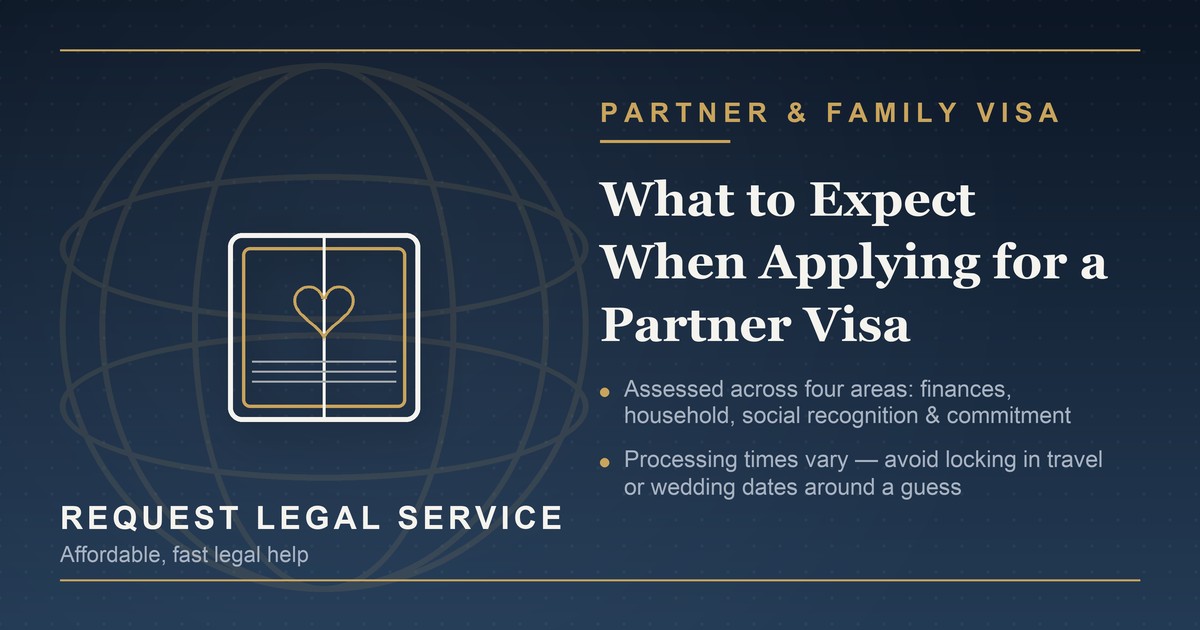
In general, Australia’s partner visa pathway involves two stages: a temporary visa followed, after a further assessment period, by a permanent one. Applicants are usually asked to demonstrate their relationship across four broad areas — financial aspects (shared expenses, joint accounts), the nature of the household (living arrangements, shared responsibilities), social recognition (how friends and family view the relationship), and the commitment between the couple (how long they’ve been together, future plans). Evidence typically includes things like joint bank statements, lease agreements, photos over time, and statutory declarations from people who know the couple. Because requirements can differ depending on whether the relationship is a marriage or a de facto partnership, and depending on individual circumstances, it’s worth treating any specific checklist as a general guide rather than a guarantee of what will be required in a particular case.
Applicants also generally need to meet health and character requirements, and sponsors have obligations of their own to satisfy before they can sponsor a partner. Processing times for partner visas have historically varied quite a bit and can change depending on visa demand and individual case complexity, so it’s generally sensible not to make firm plans — such as booking travel or a wedding — around an assumed decision date.
When it typically makes sense to involve a solicitor or migration agent
Many people start a partner visa application on their own, and straightforward cases can sometimes be completed without professional help. However, it’s common to instruct a solicitor or a registered migration agent when a relationship history is complex (for example, a previous marriage, a period of separation, or limited shared address history), when there are character or health concerns that might need extra explanation, when a previous visa application was refused, or when the couple is working against a visa expiry date and wants to minimise the risk of delay caused by an incomplete application. A professional can also help make sure the evidence is organised in a way that’s easy for a case officer to assess, which in many cases reduces the likelihood of requests for further information that can add months to processing.
Red flags worth being aware of generally include: submitting an application with limited combined evidence across the four relationship categories, missing a request for further documents within the time given, or providing inconsistent information between the sponsor’s and applicant’s statutory declarations. None of these are automatically fatal to an application, but they’re common reasons cases take longer or face additional scrutiny.
What happens after you submit
Once lodged, a partner visa application generally moves through document verification, health and character checks, and a substantive assessment of the relationship evidence. A case officer may contact the couple, referees, or both for more information, and in some cases may conduct interviews. Because migration rules and processing practices can change and can also depend on individual visa subclass and circumstances, it’s worth checking current guidance directly with the Department of Home Affairs or a qualified migration professional rather than relying on general timelines from past cases.
If you’re navigating a partner visa application — or any immigration matter — and want to be matched with a solicitor or registered migration agent who can look at your specific situation, you can submit a free enquiry at Request Legal Service and get connected with someone suited to your case.
This article is for general informational purposes only and is not legal advice. Laws vary across Australian states and territories, and can change over time — for guidance on your specific situation, speak with a qualified solicitor or lawyer. Request Legal Service does not act as a law firm or provide legal representation.