
If you’re in a relationship with an Australian citizen, permanent resident, or eligible New Zealand citizen and want to live together in Australia, a partner visa is usually the pathway that applies. It’s one of the more complex visa categories to navigate, partly because the application has two stages and partly because the evidence requirements are extensive. Understanding what’s involved before you start can save a great deal of stress later.
What the partner visa pathway covers
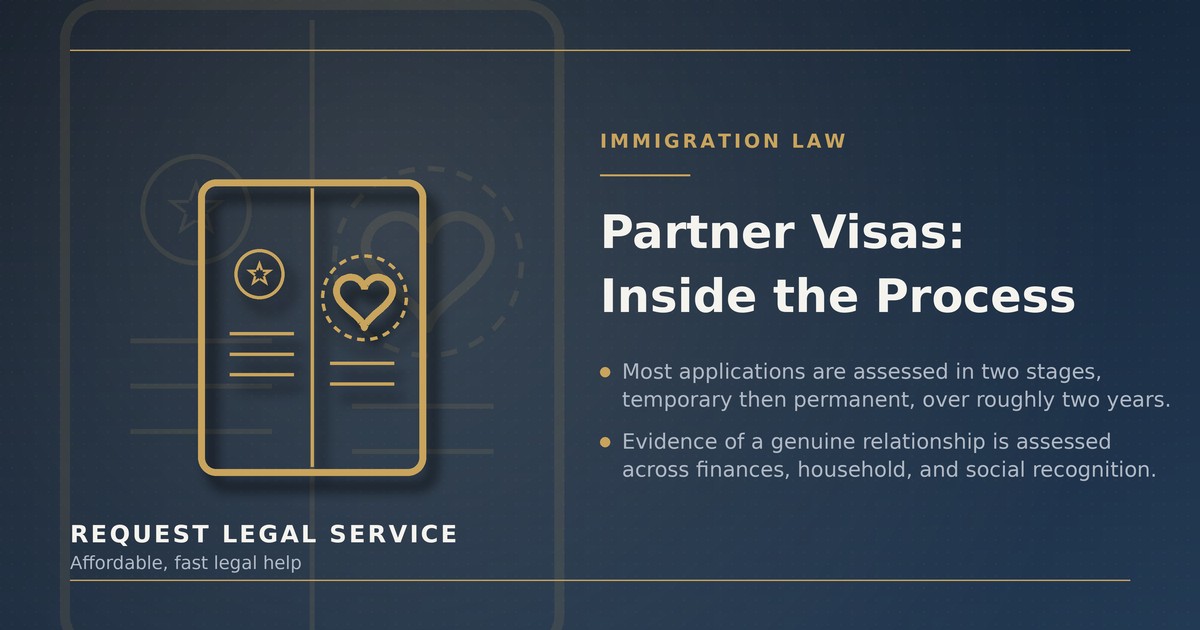
The partner visa category generally allows a person to apply for temporary residency first, with permanent residency assessed roughly two years later, provided the relationship is ongoing. Applicants can typically apply while onshore (already in Australia) or offshore (from outside the country), and the pathway can apply to married couples and de facto couples alike, including same-sex couples. The visa also generally allows the applicant to work and study in Australia while the application is being processed, in most circumstances.
Because the subclasses and exact requirements can be adjusted by the Department of Home Affairs from time to time, it’s worth treating any specific processing times, fees, or document checklists you’ve seen online as a general guide only, and confirming the current requirements directly with the department or a migration agent or solicitor before relying on them.
What the process typically involves
In general, a partner visa application asks you to demonstrate that the relationship is genuine and continuing. This usually means providing evidence across several categories: financial aspects of the relationship (shared accounts, joint bills), the nature of the household (living arrangements, shared responsibilities), social recognition of the relationship (how friends and family view it, joint social activities), and the commitment between the couple (length of the relationship, future plans). Applicants are often asked to provide statements from each partner along with supporting statements from people who know the couple.
Processing can take a considerable amount of time, and in many cases applicants are asked follow-up questions or for additional evidence during the assessment. Character and health checks are also typically required. Because the evidence threshold is detailed and the consequences of a refusal can be significant — including possible restrictions on reapplying — many applicants choose to instruct a migration agent or immigration lawyer to help prepare the application, particularly where the relationship history is complex (for example, a previous marriage, time spent living apart, or a shorter relationship history).
Common red flags and pitfalls
A few issues tend to come up repeatedly in partner visa matters. Gaps or inconsistencies between what each partner states in their individual statements can raise questions, as can a lack of documentary evidence for the early stages of the relationship. Relationships that have only recently become de facto, or where the couple has spent long periods living in different countries, often need more detailed explanation and evidence to address. Missing a request for further information within the stated timeframe can also delay or jeopardise an application, so it’s generally important to respond to any departmental correspondence promptly.
If a partner visa application is refused, there may be review rights available, but strict time limits usually apply to lodging a review, so it’s important to act quickly and seek advice as soon as a decision is received rather than waiting.
When to get help
Many people start the process themselves and only seek professional help once questions get complicated — but earlier advice is often more valuable than advice sought after a refusal. A registered migration agent or immigration lawyer can help assess which visa subclass and evidence strategy suits your situation, review your supporting documents before lodgement, and respond to any requests from the department on your behalf.
If you’re considering a partner visa application, or you’ve received a request for more information or a refusal and aren’t sure what to do next, submitting an enquiry through Request Legal Service can help connect you with a solicitor or migration agent suited to your situation, generally at no cost to make the initial enquiry.
This article is for general informational purposes only and is not legal advice. Laws vary across Australian states and territories, and can change over time — for guidance on your specific situation, speak with a qualified solicitor or lawyer. Request Legal Service does not act as a law firm or provide legal representation.